
Home › Peptide Therapy › TB-500
Recovery Peptides
TB-500 is a recovery peptide for muscle, tendon and ligament injuries, prescribed here after an exam and built into a rehab plan. It’s modeled on thymosin beta-4, a repair protein your platelets and immune cells release at an injury to help new cells move in and rebuild.
Physician-prescribed · Often paired with BPC-157 · Built into a rehab plan
The Short Answer
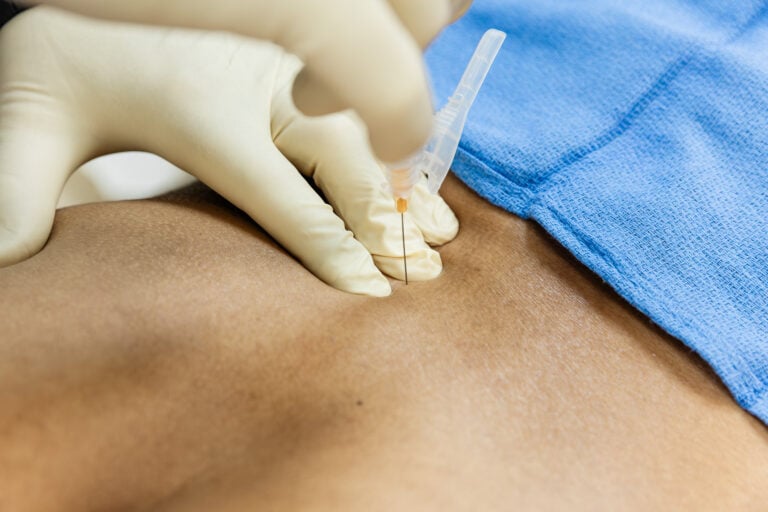
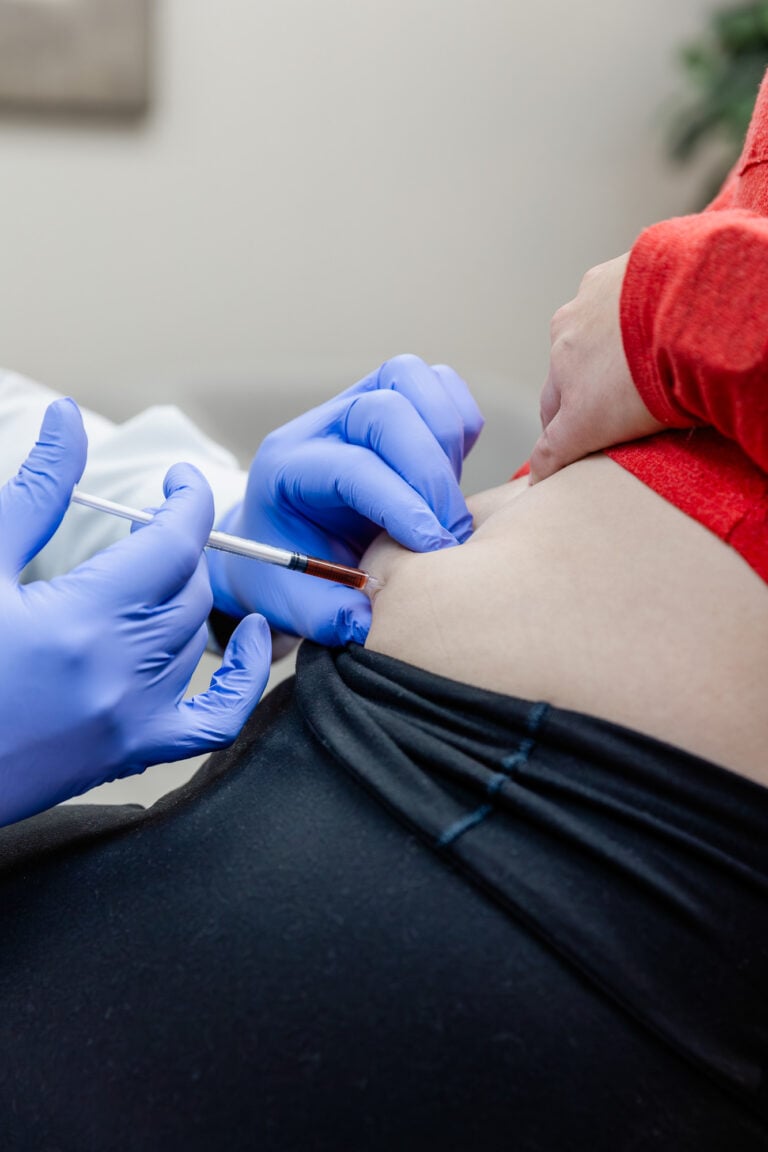
TB-500 is a lab-made peptide based on thymosin beta-4, the protein your body releases at an injury to help repair cells move in. Dr. St. Marie prescribes it for musculoskeletal injuries, usually as one part of a plan that also includes hands-on treatment, a loading program and, often, BPC-157. It can be given as an IV infusion alongside BPC-157, as a small injection under the skin, or placed deep into the injured tissue.
| Based on | Thymosin beta-4, a 43-amino-acid repair protein found in nearly every cell of the body |
|---|---|
| Used here for | Pulled muscles, tendon and ligament injuries, and soft-tissue recovery after surgery |
| How it’s given | A small injection under the skin, or as part of a blended oral strip |
| How fast it works | Varies, with little human data on timing; soft tissue keeps remodeling for months |
| Evidence so far | Promising animal research on thymosin beta-4 and small human trials of the full protein for wound and eye healing; almost no human data on TB-500 itself |
| FDA status | Not FDA-approved. Prescribed only after an exam, with informed consent |
| Tested athletes | Named on the World Anti-Doping Agency Prohibited List |
Is It Right for You?
Pick the situation closest to yours.
A pulled muscle or a sprained joint from the last few weeks. TB-500 can be part of a plan to help the tissue rebuild while you stay active, with hands-on treatment to keep the area moving.
The calf that tweaks every spring or the elbow that’s ached for a year. These usually need a real loading plan, and TB-500, often with BPC-157, can help the tissue respond.
Once your surgeon clears you, TB-500 may be added to physical therapy to support the soft tissue around the repair. We coordinate with your surgical team.
In animal studies, thymosin beta-4 helped injured tissue even when it was given away from the injury, so people with more than one problem area often ask about it. We’ll examine the whole body before deciding.
TB-500 isn’t for you. Thymosin beta-4 and its derivatives, including TB-500, are banned in tested sport. We’ll build your recovery around osteopathic care and other options.
How It Works
Thymosin beta-4 manages actin, the protein cells use to change shape and move. After an injury, platelets and immune cells release it at the site, where it helps repair cells migrate in, supports new blood vessels and calms inflammation, as summarized in a 2012 review in Expert Opinion on Biological Therapy.
TB-500 is built around the short stretch of thymosin beta-4 that grabs actin, the seven letters lit up below. Researchers mapping its active sites tied that stretch to wound repair and new blood vessel growth, and animal studies in skin, eye and heart injuries laid the groundwork for clinical trials in wound healing.
Sources: Goldstein AL, et al. Expert Opin Biol Ther, 2012; Sosne G, et al. FASEB J, 2010; Philp D, et al. Ann N Y Acad Sci, 2010.
TB-500 vs. BPC-157
They’re often used together because they act through different pathways.
Getting Started
Three visits frame most courses. Most people stay active the whole time, and we add osteopathic treatment if the area is stiff or guarded.
We look at the injury and your whole history, including any history of cancer, and decide whether TB-500 belongs in the plan.
You leave with the form, the schedule, a demonstration and a rehab program to follow while you’re on it.
At the end of the course we measure strength, motion and pain against where you started.
TB-500 Questions
Mainly recovery from soft-tissue injuries: pulled muscles, sprains, and tendons or ligaments that are slow to heal. Here it’s prescribed for musculoskeletal injuries, often together with BPC-157.
Not exactly. Thymosin beta-4 is the natural 43-amino-acid protein. TB-500 is a synthetic peptide built around the part of thymosin beta-4 that binds actin, which is responsible for much of its repair activity.
Neither wins across the board. BPC-157 is usually aimed at one tendon, ligament or the gut. TB-500 supports soft-tissue recovery more broadly, sometimes across several areas. Plenty of plans use both.
Human research on TB-500 itself is thin, so long-term effects aren’t well defined, and that’s the main reason it belongs under a physician’s care. Day to day, the usual nuisance is a little soreness or redness where you inject. Because thymosin beta-4 encourages cell movement and new blood vessels, we ask about any history of cancer before prescribing it.
People often notice they’re moving more easily within a few weeks. Soft tissue rebuilds over months, so we judge results at the end of the course, not after a few doses.
Many recovery plans do, because the two work through different pathways. Whether you need both depends on the injury, and we’ll tell you if one is enough.
Not if you compete in a tested sport. Thymosin beta-4 and its derivatives, including TB-500, are named on the World Anti-Doping Agency’s Prohibited List.
Sometimes. TB-500 can be placed deep into the injured tissue, given as a small injection under the skin, or given as an IV infusion alongside BPC-157. In animal research, thymosin beta-4 helped even when it was given away from the injury, so Dr. St. Marie picks the route for your injury and your plan spells out exactly where and how.
It isn’t. TB-500 has no FDA approval for any condition, so it’s prescribed here only after an exam, and you sign an informed consent that spells out what is and isn’t known.
There is animal research on thymosin beta-4 and hair follicles, but that’s not why we prescribe it. If hair is your goal, ask us about regenerative options for the scalp instead.
It depends on the form and how many weeks your plan runs. Peptides are billed separately from visits, and you’ll know the price before anything is ordered.
TB-500 is an elective therapy without FDA approval for any condition. It’s prescribed only after an exam and signed informed consent, as one part of a recovery plan, and results differ from person to person. See all peptides.
Keep Exploring
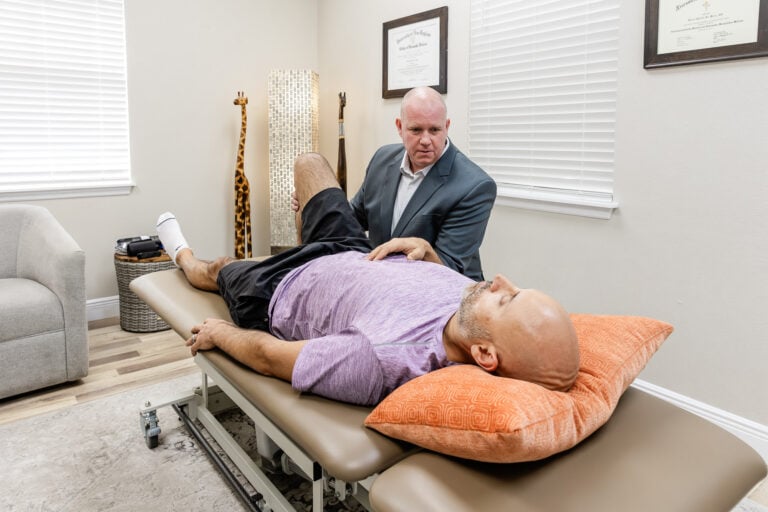
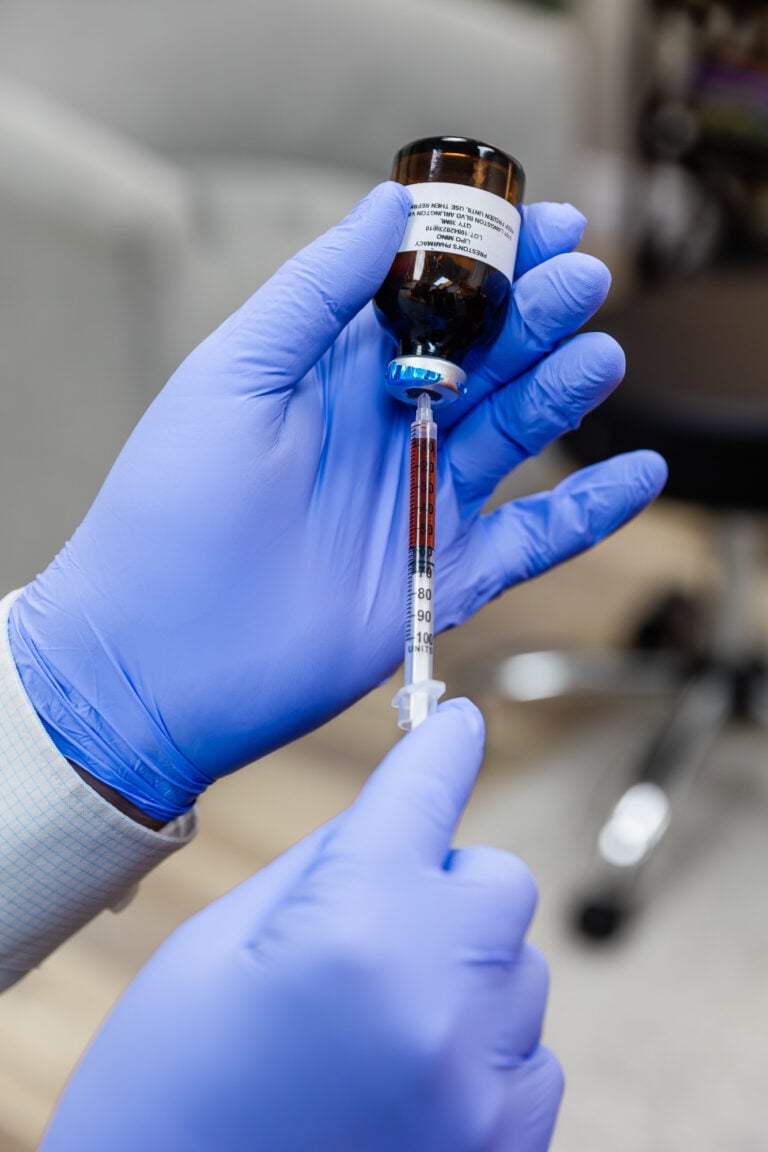
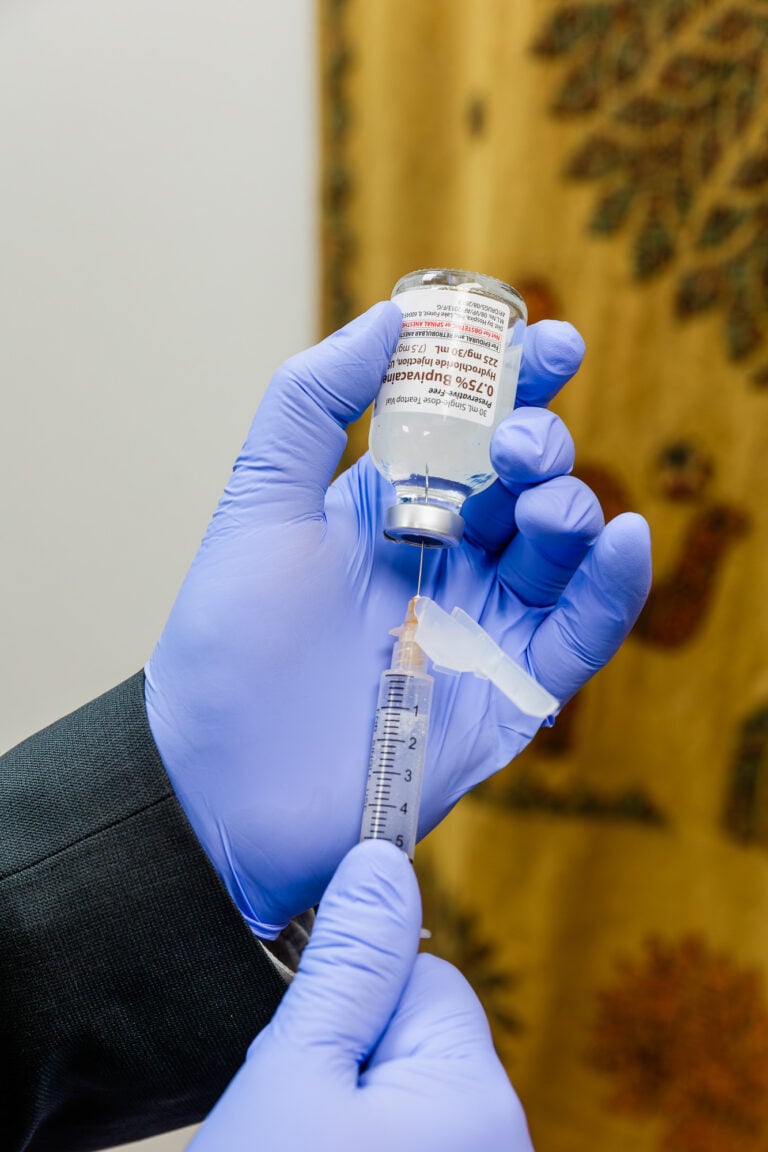
Inside our Baldwin Park office
Our Integrative Services
 Neck & Back Pain
 Headaches
 Migraines
 Pelvic Pain and Incontinence
 Shoulder Pain
 Hip, Knee, and Foot pain
 Pregnancy Pain
 Post Stroke pain & weakness
 Post Operative Pain
 Complex Medical Cases
 Autoimmune diseases
 Liver Health & Detoxification
 Weight loss
 Hormone imbalance
 Joint & tendon injuries
 Arthritis & degenerative wear
 Newborns & Infant issues
 Facial paralysis
 Chronic Respiratory Issues